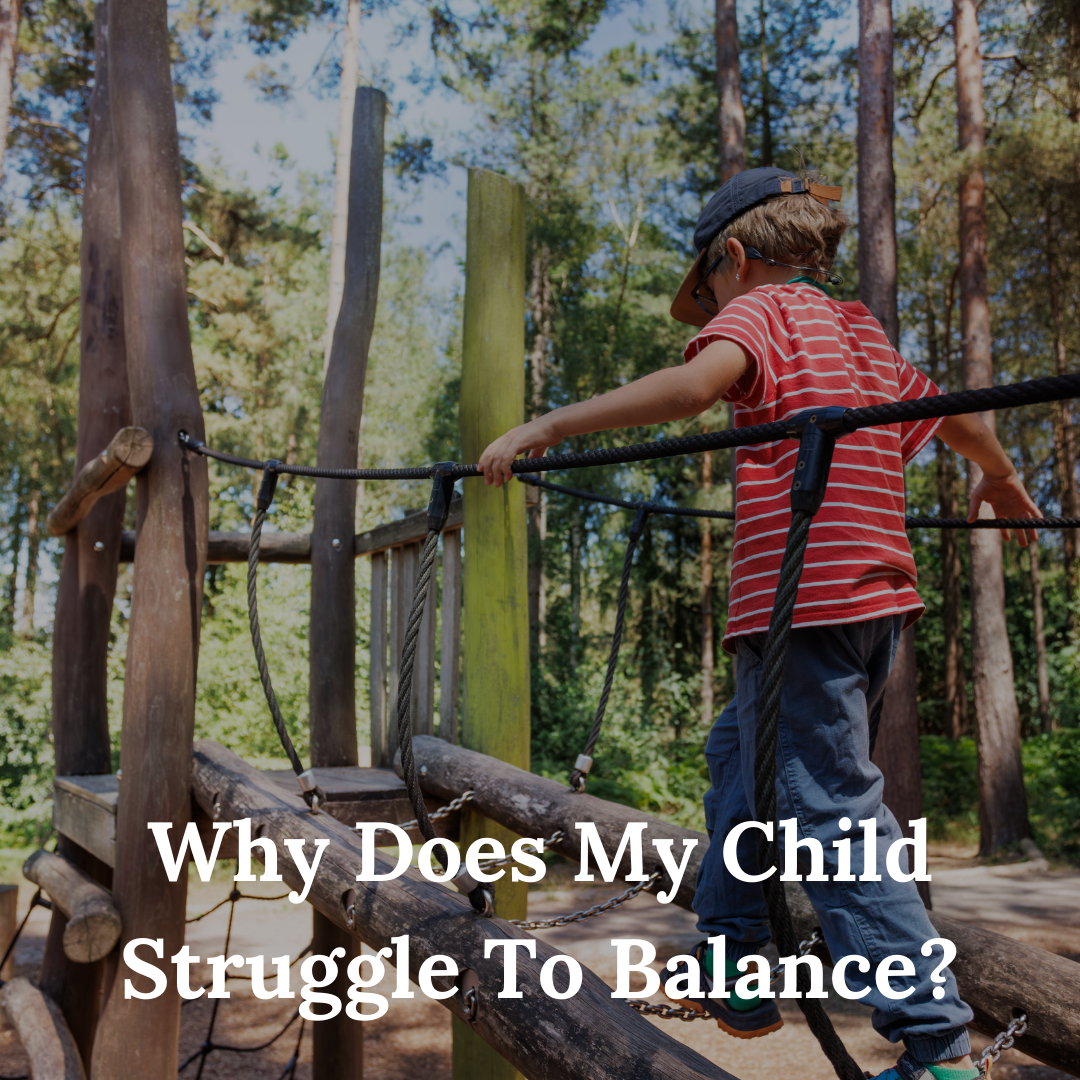
Why Does My Child Struggle To Balance
Many parents notice their child having difficulty with balance during everyday activities. Some children may wobble while standing on one foot, struggle during sports, or fall more often than other kids their age. When this happens, parents often begin asking the question: why does my child struggle to balance?
Balance is a complex skill that depends on coordination between the brain, nervous system, muscles, and joints. When one part of this system is still developing or working inefficiently, children may experience challenges with coordination and stability.
Understanding why your child struggles to balance can help parents support their child’s development and encourage healthy movement patterns.
How Balance Develops in Children
Balance is not something children are born with fully developed. It improves gradually as the nervous system learns to coordinate movement throughout the body.
When parents ask why does my child struggle to balance, it is often because they notice their child having difficulty during activities like running, climbing, or standing still.
Balance depends on several systems working together. The brain must process information from the inner ear, muscles, and joints to determine how the body is positioned. The nervous system then sends signals to the muscles to make small adjustments that keep the body upright.
Because these systems are still developing during childhood, some kids take longer to develop strong balance and coordination.
The Role of the Nervous System in Balance
A major reason a child may struggle to balance involves how the nervous system communicates with the body.
The nervous system constantly receives information about body position and movement. It then sends signals to muscles to adjust posture and maintain stability.
If communication between the brain and body is not functioning efficiently, children may experience difficulty coordinating these movements. This can lead parents to ask why their child struggles to balance during physical activities.
Supporting healthy nervous system function plays an important role in helping children develop better balance.
Posture and Balance
Posture can also influence why a child struggles to balance. When posture places the body’s center of gravity too far forward or backward, maintaining balance becomes more difficult.
Children who frequently slouch or lean forward may have a harder time stabilizing their body during movement. Because posture affects how weight is distributed throughout the body, it can influence coordination and stability.
Helping children develop healthy posture habits can support improved balance and movement.
Signs Your Child May Be Struggling With Balance
Parents who ask why does my child struggle to balance often notice patterns in their child’s movement.
Some children may frequently trip while walking or running. Others may have difficulty standing on one foot or participating in activities that require coordination such as riding a bike or playing sports.
In some cases, children may avoid physical activities because maintaining balance feels challenging.
Activities That Help Improve Balance
Encouraging movement and physical activity can play a big role in helping children develop better balance.
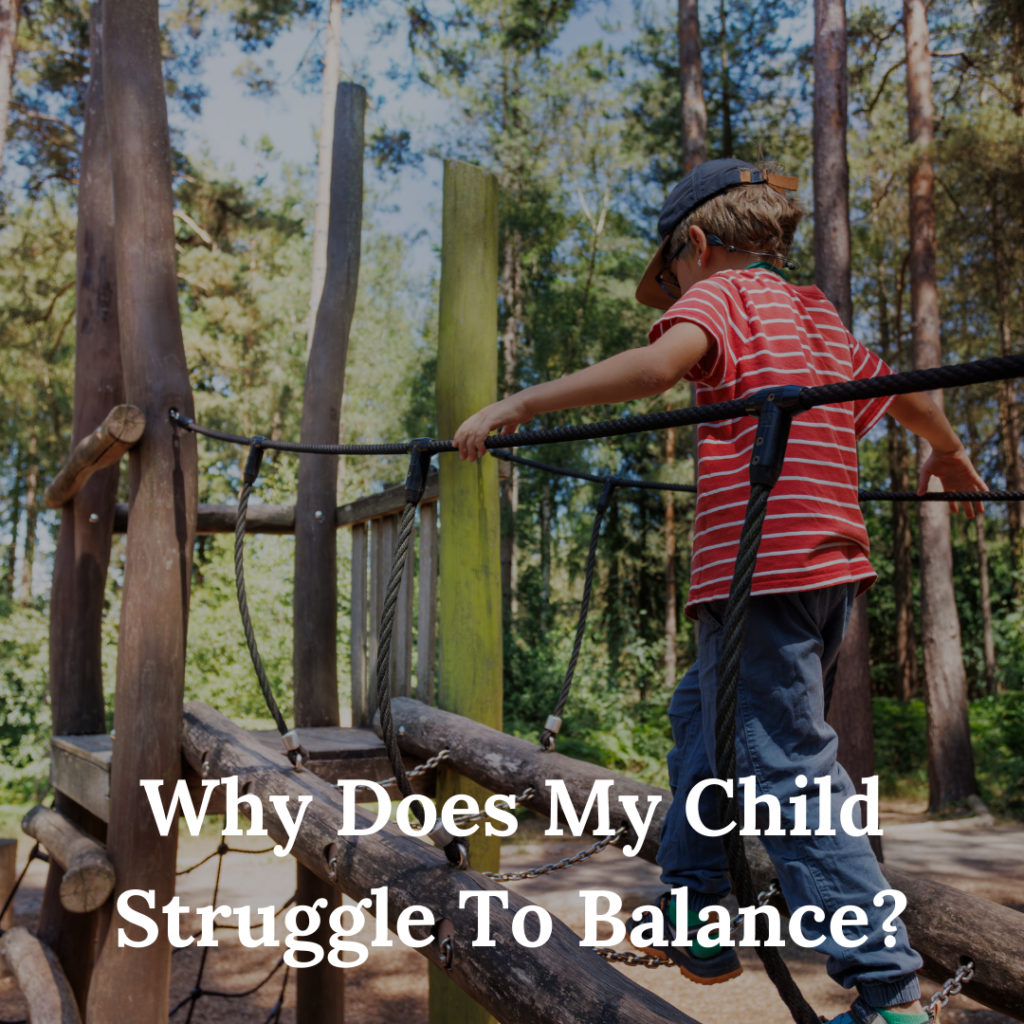
Activities such as climbing playground equipment, balancing on one foot, jumping, and playing sports help strengthen the muscles and coordination needed for stability.
Outdoor play is particularly beneficial because it challenges children to adapt their movements to different surfaces and environments.
As children gain experience with movement, their balance and coordination often improve naturally.
How Chiropractic Care May Help
Chiropractic care focuses on supporting healthy spinal movement and proper nervous system communication. Because balance depends on coordination between the brain and body, spinal health can play an important role in movement patterns.
Families sometimes explore chiropractic care when they are asking why their child struggles to balance or when coordination challenges continue over time.
Supporting spinal movement and nervous system function may help children develop better posture, coordination, and stability as they grow.
Supporting Families in Traverse City
At Third Coast Chiropractic, we work with many families who have questions about their child’s posture, coordination, and movement development.
Understanding why your child struggles to balance can help parents support healthy development and encourage stronger movement patterns.
If your child frequently struggles with balance or coordination, evaluating posture and spinal health may help support improved movement and stability.