Screen Time and Kids
Screens are everywhere, from homework on laptops to after-school tablet use. While technology is an incredible tool, too much screen time can affect posture, focus, sleep, and even mood. As families settle into the school year, it’s important to create healthy screen habits that support your child’s growing body and mind.
The Impact of Screen Time on kids
Physical Strain – Long hours sitting and hunching can cause neck, back, and shoulder discomfort.
Eye Fatigue – Staring at screens too long contributes to headaches, squinting, and tired eyes.
Behavioral Changes – Overstimulation can lead to irritability, mood swings, and poor sleep.
From a chiropractic perspective, posture stress affects more than just muscles, it impacts the nervous system, which controls focus, sleep, and immune function.
How Much Screen Time is Too Much?
According to the American Academy of Pediatrics (AAP), children ages 6 and older should have consistent limits on screen use, while younger kids should have even less. But in today’s world, especially with schoolwork tied to screens, it’s less about strict numbers and more about balance.
The key: make screen time healthier, not just shorter.
Healthy Screen Habits for Students
1. Prioritize Posture
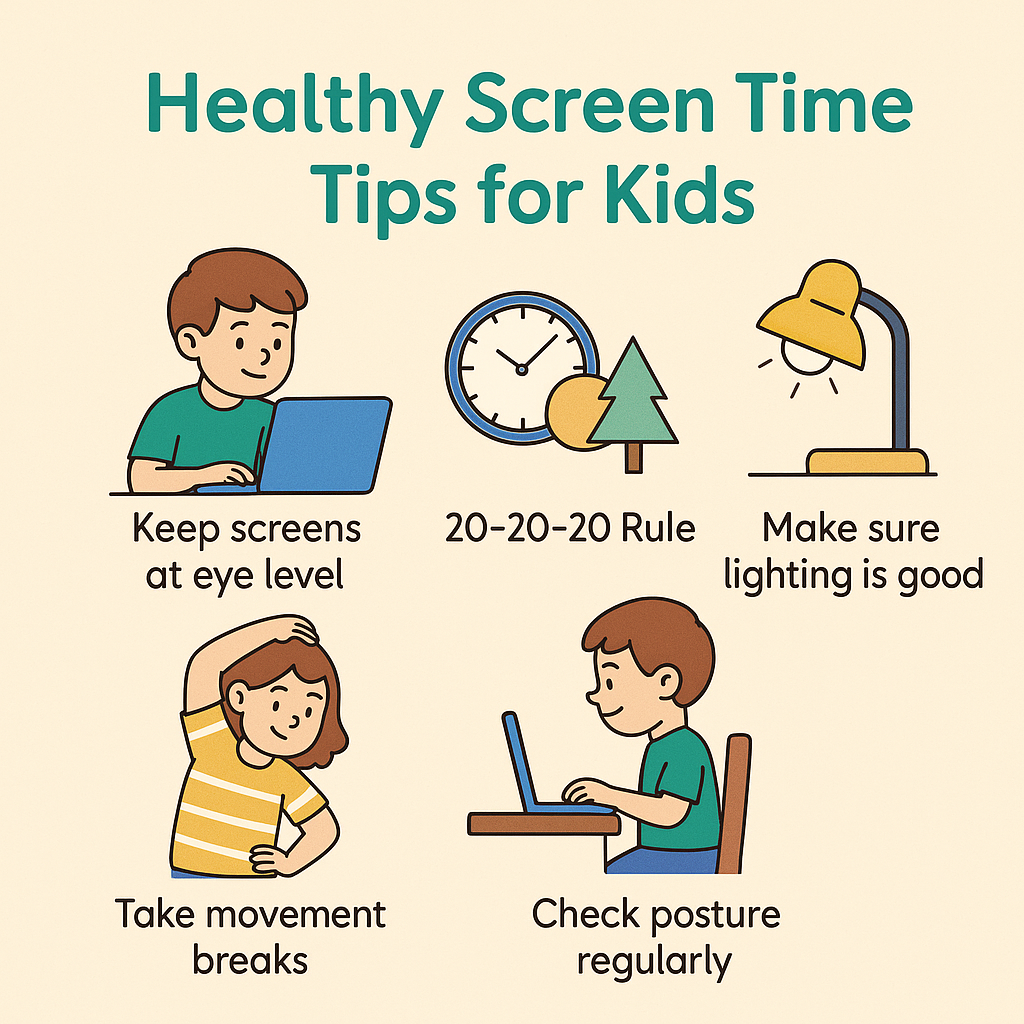
Keep screens at eye level, feet flat on the floor, and the back supported by the chair.
2. Use the 20-20-20 Rule
Every 20 minutes, look 20 feet away for 20 seconds to reduce eye strain.
3. Set Up Good Lighting
Avoid working in dim rooms, the right lighting prevents squinting and headaches.
4. Movement Breaks
Encourage stretching or walking every 30–40 minutes to reset posture and improve circulation.
5. Sleep & Screens
Turn off screens at least 1 hour before bedtime. Blue light delays melatonin production, making it harder for kids to wind down.
The Role of Chiropractic Care
Healthy screen time isn’t only about habits, it’s also about how your child’s body handles daily stress.
Chiropractic adjustments support proper posture and spinal alignment.
Improved nervous system function can help kids focus, rest better, and adapt to school demands.
Prevention now can save years of strain on a growing spine.
Practical Tips For Parents at Home
Create a screen station with ergonomic setup.
Model balance by limiting your own screen use.
Encourage outdoor play, sports, and creative hobbies.
Use positive language: “Let’s take a movement break” instead of “You’ve had too much screen time.”
Conclusion
Screen time is part of modern school life, but it doesn’t have to harm your child’s health. By building simple habits like posture awareness, regular breaks, and balanced routines, your child can thrive academically while staying healthy.
✨ If your child struggles with posture, focus, or recurring headaches during the school year, schedule a visit at Third Coast Chiropractic. We’d love to help your family feel and function at their best.
You can reach us by clicking the button below or texting/calling at 231-354-2600 for a free consultation or scheduling.