How Poor Posture Affects Kids’ Brain Function
Poor posture affects brain function. Many parents focus on their child’s posture because they want them to sit up straight or avoid back pain. However, posture may influence more than just the spine. Researchers and health professionals are increasingly recognizing that posture may also affect how the brain functions.
Understanding how poor posture affects kids brain function is becoming especially important as children spend more time sitting in classrooms, using tablets, and looking down at phones. When posture habits place stress on the spine and nervous system, it can sometimes affect focus, energy levels, and overall comfort.
Because the brain and body are closely connected through the nervous system, posture may play a larger role in a child’s development than many parents realize.
The Connection Between Posture and the Nervous System
To understand how poor posture affects kids brain function, it helps to understand the relationship between the spine and the nervous system.
The brain communicates with the rest of the body through the spinal cord and surrounding nerves. This communication system helps control movement, coordination, focus, and many other functions that children rely on every day.
When posture places stress on the spine, it can sometimes create tension in the muscles and joints surrounding the nervous system. Over time, this tension may make it harder for the body to maintain efficient communication between the brain and the rest of the body.
Because children’s bodies are still developing, maintaining healthy posture habits can help support proper nervous system function as they grow.
How Poor Posture Affects Kids Brain Function in Daily Activities
Parents may notice signs that poor posture affects kids brain function during everyday activities like reading, homework, or sitting in class.
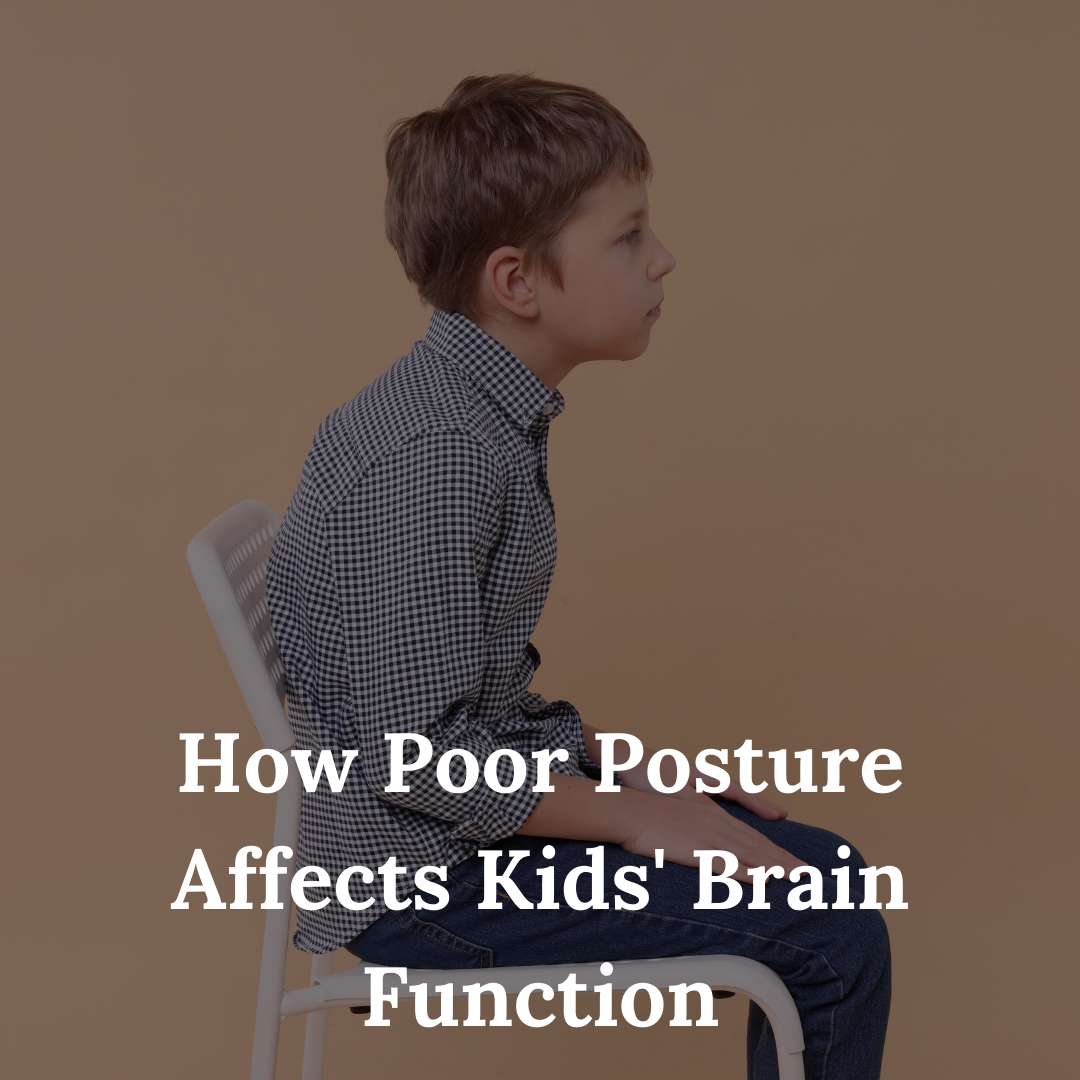
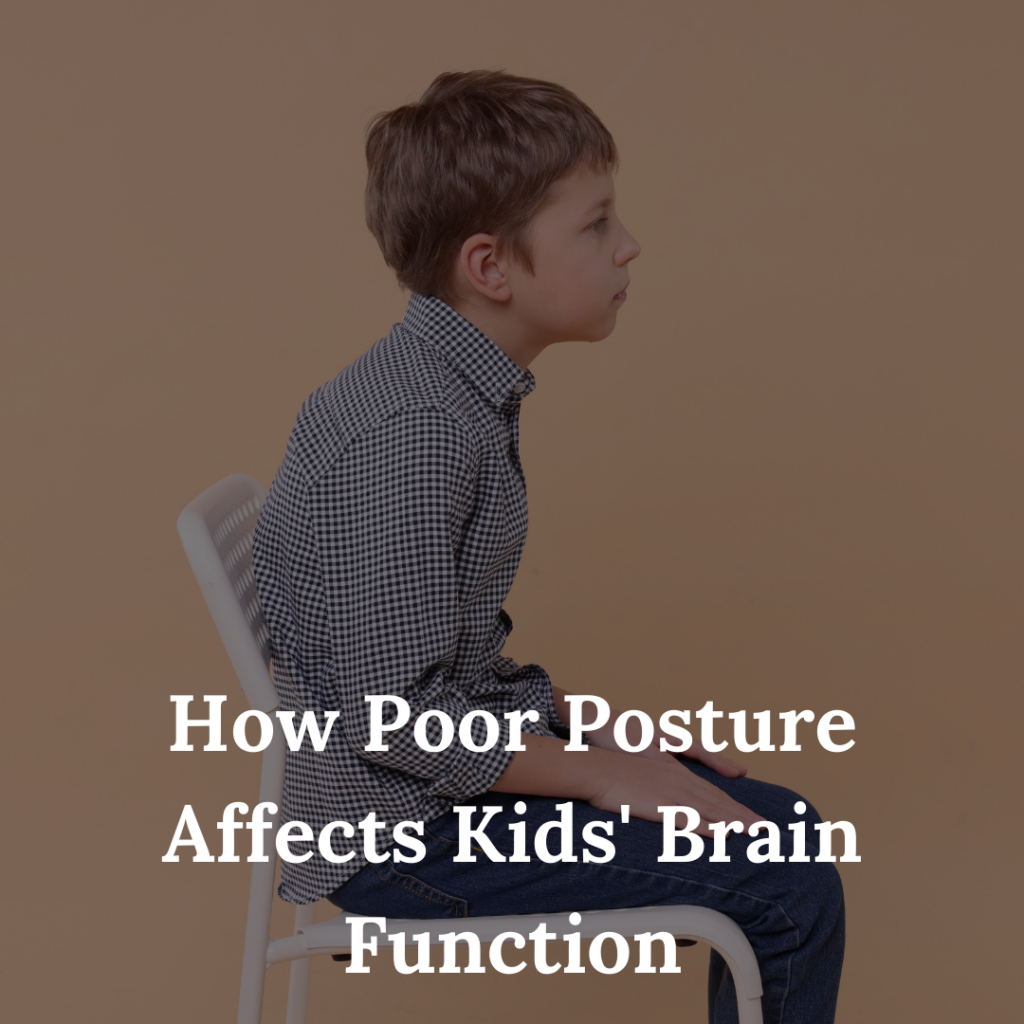
When children sit with their shoulders rounded forward and their head pushed in front of their body, the muscles in the neck and upper back must work harder to support the weight of the head. This extra strain can lead to muscle fatigue and tension.
Over time, this tension may make it more difficult for children to maintain focus or remain comfortable while sitting for extended periods. Some kids may appear restless or frequently shift positions because their posture is placing stress on their body.
In these situations, posture may indirectly influence how well children can concentrate and participate in activities that require sustained attention.
Screen Use and Posture Problems in Kids
One reason poor posture affects kids brain function more today than in the past is the increased use of digital devices.
Tablets, phones, and laptops often encourage children to bend their heads forward and look downward for long periods of time. This position places additional strain on the neck and upper spine.
As this posture becomes a daily habit, it may lead to muscle tightness, headaches, and fatigue. When children are physically uncomfortable, it can become more difficult for them to stay focused during schoolwork or reading.
Helping children develop healthier posture habits during screen use can support both spinal health and overall comfort.
Signs Poor Posture May Be Affecting Your Child
Parents may notice several clues that poor posture affects kids brain function or daily performance.
Some children struggle to sit upright for long periods and frequently lean forward while reading or doing homework. Others may complain about neck tension, headaches, or fatigue after school.
In some cases, children may appear distracted or restless when sitting for extended periods. While many factors influence focus and behavior, posture may sometimes contribute to these challenges.
Recognizing these signs early allows parents to help their children develop healthier posture habits.
Helping Kids Improve Posture
Supporting healthy posture can make a significant difference for growing children. Encouraging children to sit with their shoulders back and their head balanced over their shoulders helps reduce stress on the spine.
Parents can also help by creating a workspace that supports proper posture during homework or computer use. Ensuring that screens are positioned closer to eye level can reduce the tendency to bend the head forward.
Regular physical activity, outdoor play, and movement throughout the day can also help strengthen posture muscles and support spinal health.
How Chiropractic Care May Help
Chiropractic care focuses on supporting healthy spinal movement and proper nervous system communication. Because the spine protects the spinal cord, maintaining healthy spinal motion may help support how the brain and body communicate.
When posture habits place repeated stress on the spine, chiropractic care may help support improved movement and reduce tension in surrounding muscles.
Many families explore chiropractic care when they notice that poor posture affects kids brain function, focus, or comfort during daily activities.
Supporting Families in Traverse City
At Third Coast Chiropractic, we work with many families who want to help their children develop healthy posture habits in a world filled with screens and sitting.
Understanding how poor posture affects kids brain function can help parents take simple steps that support their child’s comfort, focus, and spinal health.
If your child struggles with posture, headaches, or discomfort while sitting in school or doing homework, evaluating posture and spinal health may help support better movement and nervous system function.