Torticollis in Babies and Children: How Chiropractic Care Can Help Naturally
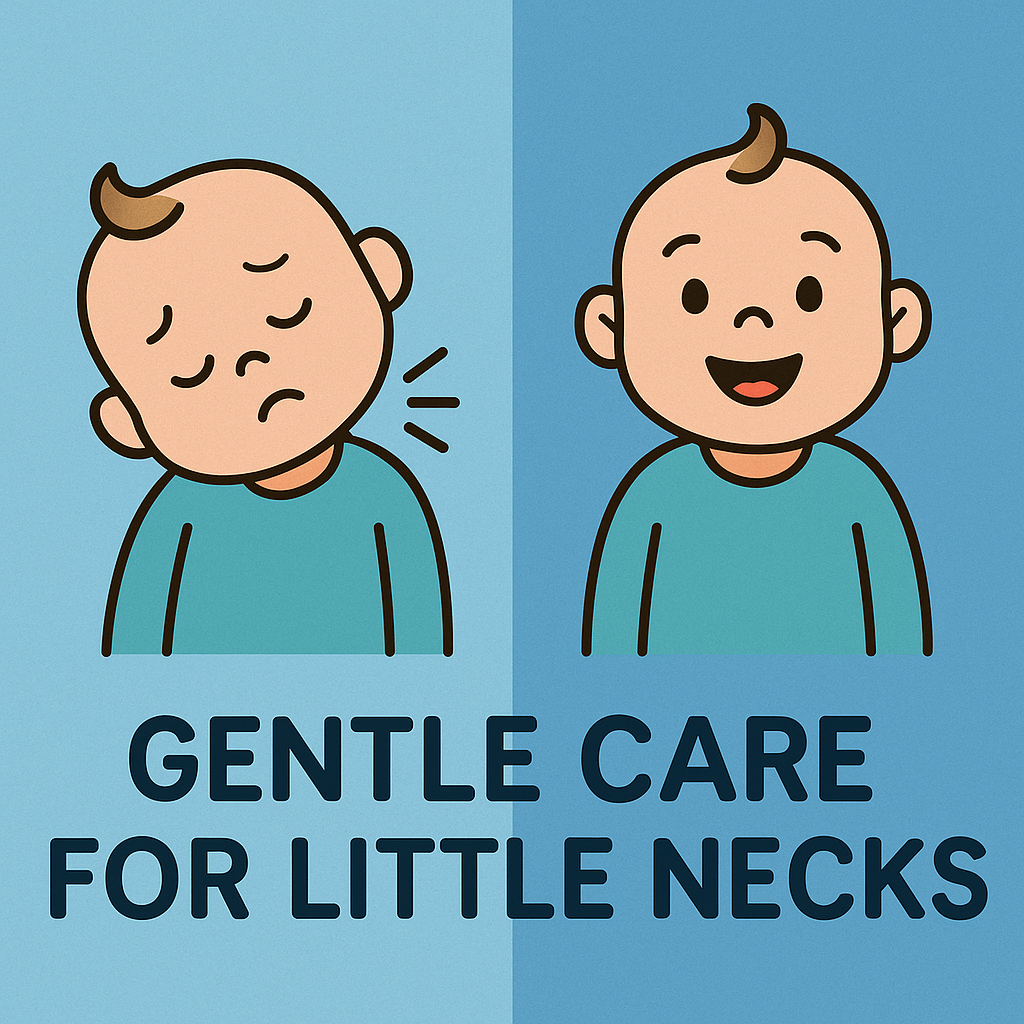
If you’ve noticed your baby’s head tilting to one side or difficulty turning evenly, you might be dealing with torticollis, a condition that’s more common than most parents realize.
Torticollis (which literally means “twisted neck”) can affect babies right from birth, and while traditional care often involves stretching or even physical therapy, chiropractic care takes a different approach, one that focuses on the root cause: the nervous system and alignment.
What Is Torticollis?
Torticollis happens when a baby’s neck muscles become tight or shortened, causing the head to tilt to one side. You might notice:
The baby’s head always turned one way.
Flattening on one side of the skull (positional plagiocephaly).
Difficulty breastfeeding on one side.
Fussiness during tummy time.
A “favorite” side for sleeping.
In some cases, it develops after birth due to positioning, car seats, or long periods on the back. In others, it starts in utero or during delivery from pressure on the neck or shoulder area.
The Traditional Medical Approach
In conventional medicine, treatment for torticollis often includes:
Stretching exercises to loosen tight muscles.
Physical therapy to build strength and improve movement.
Helmet therapy if the head shape becomes uneven.
These approaches can be effective, but they usually focus on the muscle tension rather than asking why the tension is there in the first place.
The Chiropractic Perspective
Chiropractors look deeper, focusing on the spine, joints, and nervous system, especially the upper neck (atlas and axis) region.
During birth (even in smooth deliveries), the baby’s neck can experience twisting or pressure. If the top vertebrae become slightly misaligned, it can:
Irritate or stress the nerves that control the neck muscles.
Cause one side of the neck to tighten more than the other.
Make it difficult for the baby to comfortably turn their head both ways.
In other words, the muscle tightness may be a symptom of nerve irritation and misalignment, not the root problem.
How Chiropractic Care Helps
Pediatric chiropractic care uses gentle, specific adjustments to restore alignment and ease pressure on the nerves and muscles. These adjustments are safe, often using no more pressure than you’d use to test the ripeness of a tomato.
By improving alignment and nerve communication, chiropractic care can:
Help muscles relax naturally without forcing movement.
Improve range of motion and comfort.
Support normal head shape and development.
Promote better feeding, sleep, and digestion.
Parents often notice improvement within just a few visits, their baby starts turning their head both ways, nursing evenly, and feeling more comfortable during tummy time.
Why Early Care Matters
If left untreated, torticollis can affect more than just the neck. As babies grow, it can lead to:
Uneven crawling or walking patterns.
Balance and coordination issues.
Spinal misalignments further down the body.
Persistent posture problems later in life.
Addressing the cause early helps your child develop with symmetry, coordination, and balance from the very start.
Chiropractic Care vs. Traditional Care
| Approach | Focus | Method | Goal |
|---|---|---|---|
| Medical/PT | Muscles | Stretching, strengthening, helmets | Reduce tightness and flattening |
| Chiropractic Care | Nervous system + spine | Gentle spinal adjustments | Restore communication and natural muscle balance |
The two can work beautifully together, chiropractic helps restore proper function, while therapy helps strengthen movement patterns once alignment is restored.
Conclusion
Torticollis isn’t just a muscle issue — it’s often a neurological and structural one. By addressing the nervous system and spinal alignment, chiropractic care helps babies move freely, feed better, and grow with balance.
If your baby prefers turning one way, has a flat spot, or struggles with feeding on one side, chiropractic care may be the missing link you’ve been looking for.
📞 Call Third Coast Chiropractic at 231-354-2600 to schedule your child’s next visit and give their growing body the best possible start.