Why Good Posture Helps Kids Learn
Why good posture helps kids learn is a question more parents are asking as children spend more time sitting in classrooms, completing homework, and using digital devices. While posture doesn’t determine how intelligent a child is, it can influence how comfortable they feel throughout the day, which may affect their ability to stay engaged and focused in class.
Imagine this…
Your child gets home from school, drops their backpack by the door, and immediately slouches onto the couch.
When you ask how their day went, they mention that their neck hurts, their shoulders feel tight, or they’re tired before homework even begins.
For many families, this isn’t unusual. Today’s students spend hours sitting at school, followed by homework, sports practices, and additional screen time at home. Over time, these daily habits can influence how their bodies move and feel.
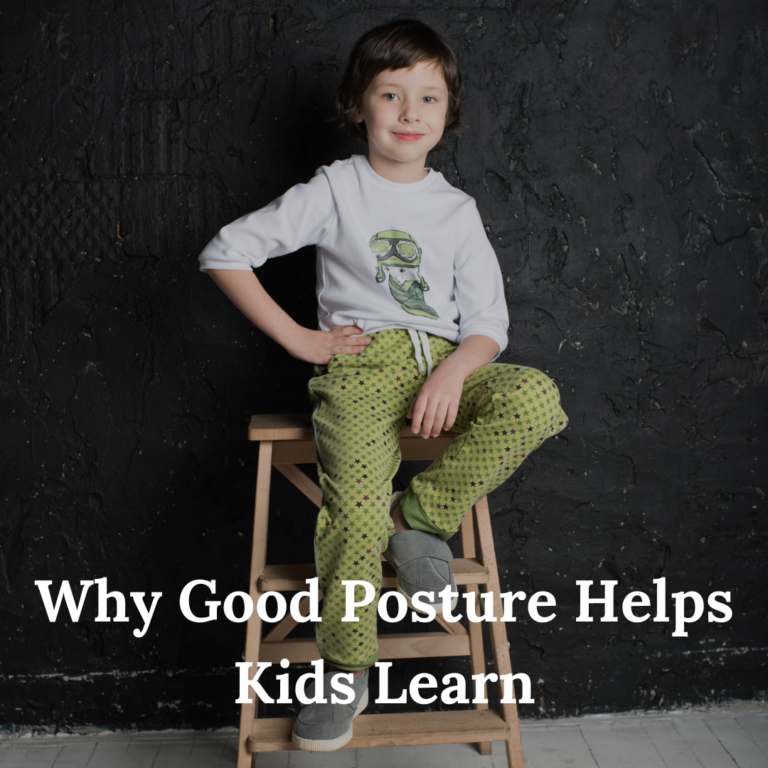
Why Good Posture Helps Kids Learn Throughout the School Day
When children maintain healthy posture, their muscles don’t have to work as hard simply to keep them upright.
Instead of constantly fighting against poor positioning, the body can move more efficiently throughout the day. This doesn’t mean children need to sit perfectly straight every minute of class. In fact, the body was designed to move regularly rather than remain in one position for hours.
Helping kids develop healthy sitting habits, changing positions often, and taking movement breaks can make a noticeable difference in how comfortable they feel during long school days.
Comfort Makes Learning Easier
Think about the last time you sat in an uncomfortable chair during a long meeting.
After a while, it’s difficult to think about anything except shifting positions.
Children experience something similar.
When their neck, shoulders, or back begin feeling tired, they naturally become distracted by discomfort. While poor posture isn’t the direct cause of learning difficulties, physical discomfort can compete for a child’s attention during lessons and homework.
Creating an environment where children can sit comfortably allows them to spend more energy focusing on learning instead of constantly adjusting their position.
Small Habits Add Up
Most posture problems don’t develop overnight.
Instead, they build gradually through small daily habits like:
- leaning over a desk
- looking down at a Chromebook
- carrying a heavy backpack
- spending hours on a tablet after school
Each habit may seem insignificant on its own, but together they can place repeated stress on a growing body throughout the school year.
Fortunately, small improvements made consistently can also add up over time.
Movement Is Just as Important as Posture
One of the biggest misconceptions is that good posture means sitting perfectly still.
Children actually benefit from movement.
Standing up between homework assignments, stretching during study breaks, walking between classes, and participating in recess or sports all give muscles and joints an opportunity to reset.
This is another reason why good posture helps kids learn, healthy posture works best when it’s paired with regular movement.
Rather than telling children to “sit up straight” all day, it’s often more helpful to encourage frequent position changes and active play.
The Connection Between Posture and the Nervous System
The nervous system helps coordinate posture, balance, movement, and muscle activity throughout the day.
As children move, their brain constantly receives information from muscles and joints that helps them understand where their body is in space. This process, known as proprioception, plays an important role in coordination and body awareness.
When movement becomes limited or posture remains unchanged for long periods, the body has fewer opportunities to receive that valuable sensory input.
Supporting healthy movement throughout the day encourages children to use their bodies the way they were designed to move.
Building Better Posture at Home
Parents don’t need to completely redesign their home to encourage healthier posture.
Simple habits can make a meaningful difference, such as:
- choosing a chair that fits your child’s size
- keeping screens at eye level when possible
- encouraging both feet to rest on the floor
- taking short movement breaks every 30 to 45 minutes
- making outdoor play part of the daily routine
These practical changes support healthy movement without adding unnecessary stress to busy family schedules.
How Chiropractic Care May Help
Chiropractic care focuses on supporting healthy spinal movement and proper nervous system communication.
Many families choose chiropractic care as part of their child’s overall wellness routine because growing bodies experience daily physical demands from school, sports, and play. Supporting healthy movement and mobility may help children stay comfortable throughout the school year.
Combined with good posture habits, regular physical activity, and appropriate backpack use, chiropractic care can be one piece of helping children move and feel their best.
Supporting Students in Traverse City
At Third Coast Chiropractic, we enjoy helping children and families throughout Traverse City develop healthy habits that support lifelong wellness.
Back-to-school season is the perfect opportunity to evaluate your child’s posture, backpack, study space, and daily routines. Small improvements today can help create healthier movement habits that last well beyond the school year.
If you’ve ever wondered why good posture helps kids learn, remember that learning isn’t just about what’s happening in the classroom. It’s also about helping children stay comfortable, active, and ready to succeed every day.
Add Your Heading Text Here
Lorem ipsum dolor sit amet, consectetur adipiscing elit. Ut elit tellus, luctus nec ullamcorper mattis, pulvinar dapibus leo.