Why Does My Child Complain About Headaches?
Why does my child complain about headaches? It is a question many parents begin asking when headaches interrupt school, sports, homework, or family activities. Children can experience headaches for several reasons, including dehydration, irregular meals, poor sleep, illness, stress, migraines, vision problems, screen habits, and tension around the neck and shoulders.
An occasional mild headache may improve with food, fluids, rest, or time away from screens. Recurring, worsening, or unusual headaches deserve a closer look.
Rather than immediately blaming one cause, parents can start by tracking when headaches occur, what other symptoms appear, and what their child was doing before the discomfort began.
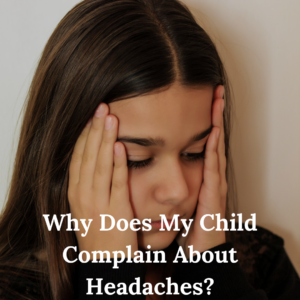
Why Does My Child Complain About Headaches After School?
The school day combines several possible headache triggers.
A child may wake up early, rush through breakfast, carry a backpack, sit for long periods, look at classroom screens, concentrate under bright lighting, and forget to drink water. By the afternoon, hunger, fatigue, visual strain, and muscle tension may all be present.
If headaches consistently begin after school, ask a few questions:
Did your child eat breakfast and lunch?
How much water did they drink?
Did they spend most of the day using a Chromebook?
Have they had physical education or sports practice?
Is the classroom unusually bright or loud?
Patterns can provide useful information for your child’s pediatrician and other healthcare providers.
Dehydration and Skipped Meals Can Contribute
Children often become absorbed in school, sports, and play without recognizing that they are hungry or thirsty.
Headaches may occur when a child has not consumed enough fluid, particularly during hot weather or athletic activity. Skipping meals can also affect how a child feels, especially if long periods pass between breakfast, lunch, practice, and dinner.
Encourage your child to begin the day with breakfast, bring an appropriate water bottle to school, and eat regular meals and snacks when permitted.
If the headaches repeatedly occur during sports or hot weather. Then pay attention to symptoms such as dizziness, nausea, weakness, unusual fatigue, or heavy sweating. These may indicate that heat and hydration are affecting more than athletic performance.
Sleep Can Affect Childhood Headaches
A tired child may look energetic while still feeling poorly.
Busy sports schedules, homework, early school mornings, inconsistent bedtimes, and nighttime screen use can reduce both the amount and quality of sleep children receive.
When parents ask why does my child complain about headaches, it is helpful to examine whether symptoms occur more often after late nights or during particularly demanding weeks.
Sleep does not explain every headache, but maintaining a predictable bedtime routine gives the body and brain a consistent opportunity to recover.
If your child snores heavily, struggles to wake up, appears unusually sleepy during the day, or consistently sleeps poorly, discuss those concerns with their pediatrician.
Could Screens or Vision Be Part of the Problem?
Screens may contribute to headaches in more than one way.
Children tend to blink less while concentrating on digital devices, which can contribute to dry or tired eyes. Low screens also encourage the head to move forward while the neck and upper back muscles work harder to support it.
However, not every headache after screen use comes from posture.
A child who squints, sits unusually close to screens, loses their place while reading, or frequently complains that words look blurry may need a comprehensive eye examination.
Parents can also encourage short breaks during prolonged screen use. Looking into the distance, blinking normally, changing position, and moving around the room may help reduce continuous visual and physical strain.
Stress and Emotional Demands Can Show Up Physically
Children do not always say, “I feel stressed.”
Instead, they may complain that their head or stomach hurts. Academic pressure, changes in routine, friendships, family stress, sports expectations, and anxiety can all influence how a child feels physically.
This does not mean the headache is imaginary.
Stress produces real physical responses, including changes in muscle tension, sleep, appetite, and how strongly the nervous system processes discomfort.
When headaches seem connected to particular school days, events, or emotionally demanding situations, talk with your child without immediately assuming they are trying to avoid something.
Ask what their day has been like and whether anything feels overwhelming.
Why Does My Child Complain About Headaches With Neck Tension?
Some children describe pressure around the forehead, temples, back of the head, or neck.
Long periods of sitting, studying, gaming, or looking downward can contribute to fatigue in the muscles supporting the head and shoulders. Sports, falls, and repetitive activity may also affect how the neck feels.
Watch how your child moves.
Do they frequently rub their neck?
Do headaches occur after homework?
Does their head stay pushed forward while using a tablet?
Did symptoms begin after a collision, fall, or sports injury?
Neck tension may be one contributing factor, but persistent headaches should not automatically be attributed to posture or spinal movement without an appropriate evaluation.
Could My Child Be Experiencing Migraines?
Children and teenagers can experience migraines.
Pediatric migraine does not always look exactly like migraine in an adult. The pain may affect both sides of the head, and episodes may be shorter. Some children experience nausea, vomiting, sensitivity to light or sound, dizziness, fatigue, or a strong desire to lie down in a quiet room.
Family history can also be relevant.
If your child experiences repeated headaches with these symptoms, schedule an appointment with their pediatrician. A healthcare professional can review the pattern, perform an examination, and determine whether further evaluation or treatment is appropriate.
Keeping a headache diary can make that visit more productive.
Create a Headache Diary
When parents wonder why does my child complain about headaches, memory alone may not reveal the answer.
For several weeks, record:
• when the headache began
• how long it lasted
• where the pain occurred
• what the pain felt like
• food and fluid intake
• sleep the previous night
• screen use
• sports or physical activity
• stress or unusual events
• accompanying symptoms
• what helped the headache improve
This information may reveal a pattern and gives your child’s healthcare provider more detail than simply saying the headaches happen “a lot.”
When Should Parents Seek Medical Care?
Recurring headaches should be discussed with your child’s pediatrician, especially when they interfere with school, sports, sleep, or ordinary activities.
Seek prompt medical attention for a sudden, severe headache, particularly if your child describes it as the worst headache they have experienced.
Medical evaluation is also important when a headache occurs with weakness, numbness, confusion, trouble speaking, difficulty walking, significant vision changes, seizures, a stiff neck, high fever, persistent vomiting, unusual sleepiness, or a recent significant head injury.
Headaches that progressively worsen, repeatedly wake a child from sleep, or appear with personality or neurological changes also deserve medical attention.
Call emergency services when symptoms suggest an immediate emergency.
What Can Parents Do at Home?
For an occasional mild headache without concerning symptoms, encourage your child to pause what they are doing.
Offer water and an appropriate meal or snack if they have not eaten. Let them rest in a calm environment and reduce bright lights or loud sounds if those worsen the discomfort.
Review the basics of their routine, including sleep, hydration, meals, screens, physical activity, and stress.
Do not repeatedly give over the counter medication without discussing appropriate use and dosing with your child’s healthcare provider. Frequent medication use can sometimes complicate headache patterns, and medication doses for children must be based on the child and the specific product.
How Chiropractic Care May Fit Into Headache Care
When a family comes to Third Coast Chiropractic asking why does my child complain about headaches, we do not assume every headache originates in the neck or spine.
We begin with the history.
When did the headaches start?
What symptoms occur with them?
Did an injury happen?
Has the child received medical or vision evaluation?
What makes the headaches better or worse?
Chiropractic care focuses on musculoskeletal movement, joint mobility, and nervous system function. For an appropriately evaluated child whose headaches occur alongside neck stiffness or musculoskeletal tension, gentle pediatric chiropractic care may be one supportive part of the overall plan.
Chiropractic care does not replace pediatric, neurological, vision, or emergency evaluation. When symptoms fall outside our scope or suggest another cause, referral to the appropriate healthcare professional is essential.
Helping Families Find the Pattern in Traverse City
So, why does my child complain about headaches?
The answer may involve hydration, food, sleep, stress, migraines, vision, illness, screens, neck tension, or more than one factor working together.
Start by listening carefully and looking for patterns. Record when headaches happen, pay attention to accompanying symptoms, and involve your child’s pediatrician when the problem recurs or affects daily life.
At Third Coast Chiropractic in Traverse City, our goal is to understand the whole child rather than reducing every headache to one simple explanation. When musculoskeletal tension contributes, we can discuss appropriate care. When another type of evaluation is needed, helping families find the right next step matters just as much.
A child who repeatedly says their head hurts is providing useful information.
The next step is finding out why.