Rib Pain During Late Pregnancy
Rib pain during late pregnancy is common as your growing uterus, changing posture, expanding rib cage, and baby’s movements place new pressure on the upper abdomen and chest wall. The discomfort may feel like soreness beneath the breasts, pressure under the ribs, a sharp sensation on one side, or tenderness that becomes worse while sitting.
For many pregnant women, rib discomfort is musculoskeletal and related to the physical changes of the second and third trimesters. The top of the uterus reaches close to the rib cage as pregnancy progresses, and the growing baby can place pressure beneath the ribs.
However, severe or persistent pain beneath the ribs, particularly on the right side, can sometimes signal a pregnancy complication. Understanding the difference between common discomfort and symptoms that require medical attention is important.
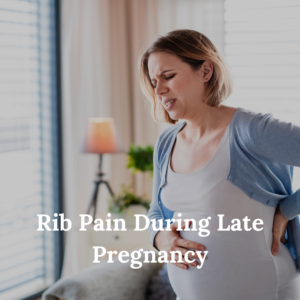
Why Does Rib Pain During Late Pregnancy Happen?
Your body has to create room for a rapidly growing baby.
As your uterus expands upward, the organs within your abdomen have less available space. Your diaphragm and rib cage also adapt as pregnancy progresses.
At the same time, your center of gravity shifts forward. You may begin leaning backward through your lower back while rounding through your upper body, especially when sitting. These changes can place additional strain on the muscles and joints surrounding the ribs, spine, and shoulders.
Pregnancy hormones can also affect the muscles and ligaments supporting your joints. Combined with a growing abdomen and changing movement patterns, this may contribute to soreness around the ribs and back.
Your Baby May Be Pressing or Kicking Under Your Ribs
Sometimes the explanation is relatively simple.
There is a baby under your ribs.
As space becomes limited, a baby’s feet, knees, back, or bottom may repeatedly press against the upper abdomen. Women sometimes describe a firm area that seems to remain beneath one side of the rib cage or sudden discomfort when the baby stretches or kicks.
Sore ribs are especially common during the later weeks of pregnancy and may be related to an active baby pressing upward.
The location of the discomfort does not reliably tell you your baby’s exact position. Your OB GYN or midwife can evaluate fetal position when clinically appropriate.
Why Is the Pain Worse When I Sit?
Sitting can compress the space between your growing abdomen and rib cage.
This is particularly noticeable when you:
- Sit in a low or soft couch
- Lean forward over a desk
- Drive for long periods
- Round your shoulders
- Work with a laptop in your lap
- Remain in the same position for too long
When your torso collapses forward, the lower ribs and upper abdomen may feel crowded.
Try sitting with your hips slightly higher than your knees and your back supported. Allow room for your belly instead of curling around it. Changing position regularly may be more helpful than trying to maintain one supposedly perfect posture all day.
Rib Pain May Be Connected to Your Upper Back
The ribs attach to the spine through joints in the upper and mid back.
That means discomfort near the front or side of the rib cage may occur alongside stiffness in the thoracic spine, shoulder blades, or surrounding muscles.
You may notice that the discomfort changes when you rotate, reach overhead, take a deep breath, or sit differently.
This can be a clue that the pain has a musculoskeletal component. It does not provide a diagnosis, but it gives your healthcare provider useful information.
Pain that is reproducible with a particular movement or tender to touch may behave differently from internal pain that is constant, severe, or accompanied by other symptoms.
Can Rib Pain Make It Harder to Breathe?
Late pregnancy can make breathing feel different.
As the uterus expands upward, some pregnant women feel more short of breath because there is less room for the diaphragm to move. ACOG lists shortness of breath among common third trimester changes.
Muscle and rib soreness may also make a very deep breath feel uncomfortable.
Mild breathlessness with activity can occur during pregnancy. Sudden or severe shortness of breath, chest pain, fainting, coughing blood, blue lips, or difficulty breathing at rest require urgent medical attention.
Do not assume significant breathing difficulty is simply caused by the baby pressing on your ribs.
What Can Help Rib Pain During Late Pregnancy?
The most helpful strategy depends on what is contributing to the discomfort.
Change Positions Frequently
Remaining in one position for hours can make an already crowded area feel more irritated.
Stand up, walk briefly, or change the way you are sitting. Even small adjustments may reduce continuous pressure beneath the ribs.
Create More Room While Sitting
Avoid collapsing forward over your abdomen.
Use a supportive chair when possible. A small cushion behind the mid or lower back may help you remain more upright without straining.
Try Gentle Movement
If your prenatal provider has not placed you on activity restrictions, gentle walking and pregnancy appropriate mobility may help reduce stiffness.
ACOG provides examples of exercises and stretches that can be performed during pregnancy, but your individual activity should still reflect your health, pregnancy, and provider’s recommendations.
Use Pillows While Sleeping
Side sleeping can place pressure on the ribs, particularly if one side is already sore.
Supporting your belly with a pillow and placing another pillow between your knees may reduce twisting through your trunk and pelvis. Some women also find that a pillow behind the back makes it easier to rest in a slightly angled position.
Avoid adding pillows or sleep positions that conflict with instructions from your obstetric provider.
Pay Attention to Tight Clothing
A tight bra band or restrictive clothing may make an already sensitive rib cage feel worse.
A professionally fitted maternity or nursing bra may be more comfortable as your rib cage and breasts change.
Ask Before Using Medication or Heat
Do not assume that an over the counter medication, pain cream, heating pad, or other treatment is automatically safe during pregnancy.
Ask your OB GYN, midwife, or pharmacist what is appropriate for you, including the product, temperature, location, dose, and duration.
When Is Rib Pain During Late Pregnancy Concerning?
Most rib discomfort is not an emergency, but pain beneath the ribs can overlap with symptoms of more serious conditions.
Contact your OB GYN or midwife promptly if the pain is:
- Severe
- Constant or progressively worsening
- Located beneath the right ribs
- Not improving when you change position
- Accompanied by a severe headache
- Associated with blurred vision, flashing lights, or other visual changes
- Accompanied by sudden swelling of the face or hands
- Associated with nausea, vomiting, or feeling very unwell
- Occurring with high blood pressure
- Accompanied by vaginal bleeding, fever, leaking fluid, or regular contractions
Severe pain just below the ribs can be a symptom of preeclampsia, especially when it occurs with headache, visual changes, rapidly increasing swelling, nausea, vomiting, or a general feeling that something is wrong. These symptoms should be assessed immediately.
You do not need to diagnose the cause yourself. Call your prenatal provider and describe exactly what you are experiencing.
Could Right Sided Rib Pain Be Preeclampsia?
Right sided pain beneath the ribs does not always mean preeclampsia.
A baby can press on the right side. Muscles can become irritated. Posture can create one sided soreness.
The reason right upper abdominal or rib pain receives extra attention is that it can also occur with preeclampsia, a serious pregnancy complication involving high blood pressure and possible organ dysfunction.
Preeclampsia is most commonly identified after 20 weeks of pregnancy, although it can also arise after delivery. Routine prenatal blood pressure checks and urine testing are important because some women have few or no noticeable symptoms.
Contact your obstetric provider rather than waiting to see whether concerning symptoms disappear.
How Pregnancy Chiropractic Care May Fit In
When a pregnant patient comes to Third Coast Chiropractic with rib pain during late pregnancy, we begin by asking questions.
Where is the discomfort?
When did it begin?
Does movement change it?
Is the area tender?
Are there headaches, visual changes, swelling, breathing problems, or other concerning symptoms?
Has the patient spoken with her OB GYN or midwife?
Chiropractic care is not appropriate for every cause of rib or upper abdominal pain. Symptoms suggesting preeclampsia, gallbladder disease, infection, a blood clot, or another medical condition require appropriate medical evaluation.
When the presentation appears musculoskeletal and care is appropriate, pregnancy focused chiropractic care may support joint mobility, spinal movement, posture, and comfort as the body adapts.
We also utilize the Webster Technique, a chiropractic analysis and adjustment approach focused on pelvic function during pregnancy. Webster care does not turn babies and does not guarantee a particular pregnancy or delivery outcome.
Finding More Comfortable Movement Before Birth
Rib pain during late pregnancy often reflects the reality that your body is running out of room.
Your baby is growing, uterus is expanding, posture and breathing mechanics are adapting. The muscles and joints around your ribs and spine are responding to demands they did not have several months ago.
Changing positions, using better support, incorporating appropriate movement, and discussing persistent symptoms with your prenatal provider may help.
At Third Coast Chiropractic in Traverse City, we support pregnant women with individualized care focused on healthy movement, spinal and pelvic mobility, and musculoskeletal comfort.
You should never feel embarrassed about calling your OB GYN or midwife because you are uncertain about a symptom.
Common discomfort can still be uncomfortable.
Concerning pain deserves timely evaluation.