Football Injuries in Kids
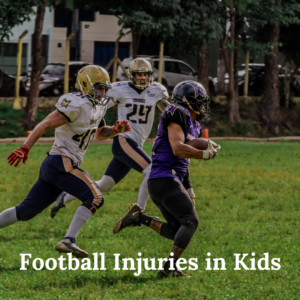
Football injuries in kids can range from temporary muscle soreness and minor sprains to fractures, shoulder injuries, and concussions. It is a a fast moving contact sport that asks young athletes to perform at high athletic levels, while repetedly absorbing physical contact. Sometimes during periods when their bodies are also growing rapidly.
That does not mean parents should be afraid of letting their children play football. Sports provide valuable opportunities for exercise, confidence, teamwork, and skill development. It does mean parents should understand what normal recovery looks like and recognize when pain or other symptoms deserve more attention.
The goal is not to eliminate every bump and bruise. It is to help young athletes participate as safely as possible while making sure significant injuries do not get dismissed as simply being part of football.
Why Football Injuries in Kids Happen
Football combines several types of physical stress into one sport.
An athlete may sprint downfield, rapidly change direction, collide with another player, fall to the ground, and immediately get back up for another play. Different positions also create very different physical demands. A lineman experiences repeated blocking contact, while a receiver may perform significantly more sprinting and cutting.
Growing athletes add another variable. During growth spurts, strength, flexibility, and coordination may temporarily change while bones and surrounding tissues adapt.
The American Academy of Pediatrics identifies ankle, knee, shoulder, finger, low back, and head injuries among concerns in youth football.
Understanding those patterns gives parents a better idea of what to watch throughout the season.
Ankle Injuries During Football
Ankle sprains are among the common football injuries in kids. They can happen when an athlete changes direction quickly, gets tackled with the foot planted, steps awkwardly, or lands unevenly.
A mild ankle injury may initially seem like something a player can shake off, but watch how your child moves afterward. If they begin limping, avoid putting weight on the injured side, or experience significant swelling and pain, the ankle deserves evaluation.
Previous ankle sprains matter too. The AAP notes that athletes with a prior sprain, particularly a recent one, have an increased likelihood of another ankle sprain.
This is why simply waiting until the pain disappears may not always be enough. Restoring strength, mobility, balance, and confidence in the ankle can be important before returning fully to competition.
This section gives us a natural internal link to Why Does My Child Keep Rolling Their Ankle?
Knee Pain Should Not Become Part of the Season
The knee handles tremendous force during football.
Cutting, pivoting, tackling, jumping, and contact from another player can all contribute to knee injuries. Some problems happen suddenly, while others become noticeable gradually as practices accumulate.
Pay attention when a child describes feeling a pop or shift in the knee during an injury. Significant swelling, inability to walk normally, a knee that feels unstable or gives way, or persistent pain should be evaluated by an appropriate healthcare professional. The AAP specifically recommends medical evaluation for these types of symptoms.
Not every sore knee represents a major ligament injury. Growing athletes can experience several types of knee discomfort, including overuse related problems.
The important point is that recurring knee pain should not simply become something your child expects every football season.
Shoulder Injuries From Tackling and Contact
Shoulders absorb considerable force during tackling and blocking.
A player may also injure the shoulder while falling to the ground or landing awkwardly after contact. Depending on the mechanism, injuries can involve muscles, joints, ligaments, or the structures that stabilize the shoulder.
A young athlete who develops persistent shoulder pain, weakness, loss of normal movement, visible deformity, or the sensation that the shoulder moved out of place should receive appropriate evaluation.
Shoulder dislocations and partial dislocations deserve particular attention in young athletes because recurrence can be a concern.
Even without a dramatic injury, repeated contact throughout a season can create soreness and fatigue. Parents should pay attention when that soreness stops improving between practices.
Low Back Pain in Young Football Players
Back pain is another problem parents may not immediately associate with football.
Linemen repeatedly extend and load their lower backs during blocking, lifting, and strength training. Running, tackling, falling, and repeated impact also place physical demands on the spine.
Occasional muscle soreness can happen after demanding activity, but persistent low back pain deserves attention. One concern in adolescent athletes is spondylolysis, a stress injury involving part of a vertebra that can be associated with repetitive back extension and high impact activity. The AAP advises medical evaluation when a young football athlete has low back pain lasting longer than two weeks.
A child should also be evaluated sooner if back pain is severe, follows a significant collision, causes weakness or numbness, changes the way they walk, or is associated with other concerning symptoms.
Concussions Are Different From Other Football Injuries in Kids
Concussion deserves its own conversation because you cannot evaluate the brain the same way you evaluate a sore muscle.
A concussion is a type of traumatic brain injury that can occur after a bump, blow, or jolt to the head, or even after a hit to the body that causes the head and brain to move rapidly. A child does not need to lose consciousness to have a concussion.
Symptoms can include headache, dizziness, nausea, balance problems, confusion, memory difficulty, slowed thinking, sensitivity to light or noise, vision problems, or simply behaving differently than usual.
Some symptoms appear immediately. Others may become noticeable hours later.
That is why a player who says, “I’m fine,” immediately after a hard hit should not be the only person deciding whether they return to the game.
If You Suspect a Concussion, Take the Athlete Out
This is one area where the recommendation is very clear.
If a concussion is suspected, the athlete should be removed from sports participation immediately and kept out for the rest of that day. A healthcare provider should evaluate the athlete and determine when it is appropriate to begin returning to sports.
Do not ask a child to shake it off or send them back for one more drive. Assuming they never lost consciousness, can be a terrible outcome for that child’s future brain development.
CDC guidance uses a gradual return to sports progression after a concussion, with increasing levels of activity under healthcare supervision. Athletes should only progress when they are tolerating the current level without new symptoms.
This is about protecting the athlete’s brain, not their statistics for one game.
Football Injuries Can Affect School Too
An injury does not stop affecting a child when practice ends.
A painful shoulder can make carrying a backpack difficult. A lower body injury can change how a child walks through school. A concussion can affect concentration, memory, reading, screen tolerance, and classroom performance.
For concussion specifically, CDC guidance notes that most children can return to school within one to two days, often with temporary supports based on symptoms. Return to school and return to sports are related, but they are not the same process.
This is especially relevant for families during fall because football season and the beginning of the school year happen simultaneously.
We are not just caring for a football player.
We are caring for a growing child who also needs to learn, sleep, recover, and function throughout the rest of the week.
Soreness Versus Injury
Parents often struggle with this distinction.
A young athlete may be sore after the first week of practice because they are performing movements their body has not done consistently for several months. General muscle soreness that improves with recovery can be part of adapting to training.
An injury tends to tell a different story.
Pain may be localized to one specific area, repeatedly return with the same movement, worsen instead of improving, cause swelling, reduce range of motion, create weakness, or change how the athlete runs or walks.
Growing children also deserve special consideration because overuse injuries can involve areas where tendons attach near developing bone. The AAP recommends further medical evaluation when a growing athlete has focal tenderness over a bone, even when swelling or movement limitations seem minimal.
When you are uncertain whether something is soreness or an injury, getting it evaluated is safer than teaching a child to ignore pain.
Recovery Is Part of Football Training
The physical demands of football do not end when practice does.
A young athlete may finish practice at 7 p.m., eat dinner, complete homework, shower, and suddenly realize it is late at night. The alarm then goes off early for school.
Repeat that schedule five days in a row, and recovery can quickly become limited.
Sleep, hydration, nutrition, rest, and appropriate mobility all contribute to how well a young athlete handles training.
Parents should watch for recurring soreness, unusual fatigue, declining performance, irritability, trouble sleeping, or a child who simply stops enjoying the sport.
Those signs may suggest that the athlete needs more recovery rather than more training.
This section gives us excellent internal links to Why Sleep Matters for Young Athletes, How to Help Kids Recover After Sports, and Signs Your Child Is Overtraining in Sports.
Can Football Injuries Be Prevented?
No strategy can prevent every injury in a contact sport.
However, risk can be reduced.
Properly fitted and maintained equipment matters. Coaching and enforcement of safe playing rules matter. Conditioning matters. Hydration matters. Appropriate strength and movement preparation matter. Most importantly, creating a culture where athletes report injuries instead of hiding them matters. The AAP emphasizes supervision, properly fitted safety equipment, safe playing environments, and emergency planning as important parts of football safety.
Parents should also understand the limits of equipment. For example, helmets are essential protective equipment, but they do not make an athlete immune to concussion.
Football safety is a combination of equipment, coaching, technique, recovery, communication, and appropriate healthcare.
How Chiropractic Care May Support Young Football Players
When a young athlete comes to Third Coast Chiropractic after developing football related discomfort, we first want to understand what happened. Was there a specific tackle, did the discomfort develop gradually, does the athlete have a previous injury, is movement limited, does something hurt during running, cutting, or lifting and are there any symptoms that suggest the athlete needs medical evaluation before chiropractic care?
For appropriate musculoskeletal complaints, chiropractic care may support joint mobility, healthy movement, and nervous system function. Care should be individualized to the athlete, their examination findings, their stage of development, and the demands of their sport.
Chiropractic care does not replace concussion evaluation, emergency care, orthopedic evaluation, diagnostic imaging, physical therapy, or other medical care when those services are indicated.
Part of caring for an athlete responsibly is knowing when someone else needs to be involved.
Keeping Young Football Players Healthy in Traverse City
Football injuries in kids cannot be completely eliminated, but we can change how quickly we recognize and respond to them.
Listen when your child says something hurts. Watch how they move after games. Pay attention when performance suddenly changes. Take possible concussions seriously. Give growing bodies enough time to recover between practices.
At Third Coast Chiropractic in Traverse City, we want young athletes to enjoy the confidence, friendships, discipline, and physical activity that sports can provide.
Our goal is not simply getting a child back onto the field as quickly as possible.
It is helping them stay healthy enough to enjoy being an athlete for years to come.