Why Do My Hips Hurt After Having a Baby?
Why do my hips hurt after having a baby? It is a question many new moms ask when they expect pregnancy aches to disappear after delivery, only to discover that their hips, pelvis, or lower back still feel sore weeks later.
Your body does not immediately return to its pre pregnancy state once your baby arrives. Pregnancy gradually changes your posture, muscles, abdominal wall, pelvic floor, and the way your pelvis handles movement. Then childbirth places another significant physical demand on the body.
Add hours of feeding, carrying your baby, interrupted sleep, and repeatedly getting up from awkward positions, and postpartum hip discomfort starts to make more sense.
The good news is that understanding why your hips hurt after having a baby can help you determine what may support your recovery and when symptoms deserve further evaluation.
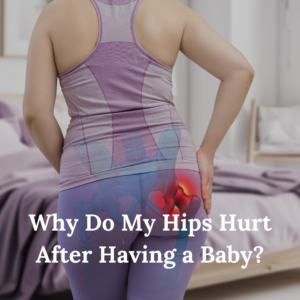
Pregnancy Changes Do Not Disappear After Delivery
Your body spent approximately nine months adapting to pregnancy.
As your belly grew, your center of gravity shifted. Your abdominal muscles stretched, your posture changed, and the muscles surrounding your hips and pelvis had to adapt.
Pregnancy hormones also influence the ligaments supporting your joints.
Then your baby is born. Those changes do not reverse overnight.
During the postpartum period, your body begins another transition as muscles regain strength and your movement patterns gradually change again.
This recovery takes time.
Why Do My Hips Hurt After Having a Baby Even Weeks Later?
One of the biggest misconceptions about postpartum recovery is that everything should feel normal after a few weeks.
Healing timelines vary considerably.
Some women feel physically comfortable relatively quickly. Others continue experiencing pelvic, hip, abdominal, or lower back discomfort for much longer.
Your recovery can be influenced by your pregnancy, delivery, activity level, sleep, previous injuries, and whether you had a vaginal or cesarean birth.
Instead of comparing your recovery with another mom’s, pay attention to how your body is progressing.
Pain that persists, worsens, or interferes with normal activities deserves evaluation.
Your Core and Pelvic Floor Are Recovering Too
Your hips do not work independently.
The abdominal muscles, pelvic floor, lower back, gluteal muscles, and hips all contribute to supporting your trunk and pelvis during movement.
Pregnancy and childbirth place substantial demands on this entire system.
During postpartum recovery, these muscles may not coordinate exactly as they did before pregnancy. That can change how everyday activities feel.
Walking upstairs, getting out of bed, standing while holding your baby, or returning to exercise may suddenly feel very different.
This is one reason postpartum rehabilitation often focuses on the whole core and pelvic system, rather than treating hip discomfort in isolation.
Carrying Your Baby on One Hip Can Add Up
Here is a postpartum habit almost every parent develops.
Baby goes on the hip.
Usually the same hip.
Every time.
It is convenient, but repeatedly shifting your pelvis to one side while supporting your baby’s weight creates an asymmetrical position.
Now consider how often you do it.
While cooking.
Walking around the house.
Talking on the phone.
Helping another child.
Standing in the grocery store.
Your newborn keeps growing, but you may continue using exactly the same carrying position.
If your hips hurt after having a baby, pay attention to whether you consistently carry your child on one side.
Try changing sides and using different carrying positions when appropriate.
Feeding Positions Can Affect Your Hips and Back
Whether you are breastfeeding or bottle feeding, feeding a newborn involves a lot of sitting.
And feedings rarely happen in a perfectly ergonomic chair.
You may find yourself curled into the corner of the couch at 2 a.m. with your shoulders rounded, pelvis twisted, and one leg tucked underneath you.
Then you stay there for thirty minutes.
Several times per day.
Those positions can contribute to stiffness through the hips, pelvis, lower back, neck, and shoulders.
Use pillows to bring your baby toward you instead of constantly bringing your body toward the baby. When possible, keep both feet supported and change feeding positions throughout the day.
Sleep Can Make Postpartum Hip Pain More Noticeable
Newborn sleep schedules are not exactly known for promoting great parental recovery.
Interrupted sleep means your body has fewer opportunities for prolonged restorative rest.
Your sleeping position can matter too.
Some women continue sleeping almost exclusively on one side after pregnancy. If that hip is already irritated, hours of pressure against the mattress may make discomfort more noticeable.
Using a pillow between your knees may help some women maintain a more comfortable position while side sleeping.
The bigger picture is important.
Your body is healing while simultaneously caring for another human being around the clock.
Recovery may require patience.
Returning to Exercise Too Quickly Can Be a Factor
Many moms are eager to exercise again after delivery.
Movement can be an excellent part of postpartum recovery, but returning to intense activity before your body is ready may increase symptoms.
Running, jumping, heavy lifting, and demanding abdominal exercises place significantly different loads on the body than gentle walking and progressive strengthening.
If your hips hurt after having a baby, increasing exercise intensity despite worsening symptoms is probably not the best strategy.
Your OB GYN or midwife can provide guidance regarding postpartum activity based on your delivery and recovery.
A pelvic floor physical therapist can also be extremely valuable for women experiencing pelvic floor symptoms, core weakness, pelvic discomfort, or difficulty returning to exercise.
What Can Help Postpartum Hip Pain?
There is no single solution because postpartum hip discomfort can have different causes.
Start with the basics.
Pay attention to how you carry your baby. Change positions during feeding. Avoid spending hours in one posture. Gradually reintroduce appropriate physical activity when cleared by your healthcare provider.
Depending on your individual situation, your recovery plan may include walking, progressive strengthening, mobility exercises, pelvic floor rehabilitation, chiropractic care, or other treatment recommended by your healthcare team.
The goal should not simply be getting back to your pre pregnancy body as quickly as possible.
The goal is helping your body recover well.
When Should Postpartum Hip Pain Be Evaluated?
Most new aches are not emergencies, but persistent postpartum pain should not automatically be dismissed because you recently had a baby.
Contact your healthcare provider if hip or pelvic pain is severe, worsening, associated with significant weakness or numbness, preventing you from walking normally, or interfering substantially with daily activities.
Seek prompt medical attention for symptoms such as chest pain, difficulty breathing, heavy bleeding, fever, or pain, swelling, warmth, or redness in one leg, particularly during the postpartum period when the risk of blood clots is increased.
New mothers often become so focused on their babies that their own symptoms get pushed aside.
Your recovery matters too.
How Chiropractic Care May Support Postpartum Recovery
When a mom tells us her hips hurt after having a baby, we want to understand more than where the pain is located.
How was pregnancy?
How was delivery?
When did the discomfort begin?
What movements make it worse?
How are you feeding and carrying your baby?
Have you returned to exercise?
At Third Coast Chiropractic, postpartum chiropractic care focuses on spinal and pelvic mobility, healthy movement, and musculoskeletal function as your body transitions after pregnancy.
Care is individualized based on your history, examination findings, stage of recovery, and goals.
Chiropractic care can also work alongside other postpartum resources. For some women, collaboration with an OB GYN, midwife, pelvic floor physical therapist, lactation professional, or another healthcare provider may be appropriate.
Postpartum recovery should not have to fit inside one healthcare box.
Postpartum Care for Moms in Traverse City
During pregnancy, everyone asks how Mom is feeling.
Then the baby arrives, and suddenly everyone asks how the baby is doing.
We should keep asking about Mom too.
If your hips hurt after having a baby, your body may simply need additional time and support as it recovers. But persistent pain should not automatically become something you accept as your new normal.
At Third Coast Chiropractic in Traverse City, we love caring for families throughout the entire journey. That includes pregnancy and newborn care, but it also means helping moms take care of themselves after their babies arrive.
You spent nine months preparing your body to bring your baby into the world.
Give yourself permission to spend some time helping it recover.